

Your Fingerprint
The Origins of Taste, Part I

I like beautiful things that are well made. I even believe aesthetics are equivalent to ethics. What is beautiful is ethical, and unethical things aren’t beautiful — from tax dodging to doing things in an underhand way.
— Gianni Agnelli, FIAT Chief Executive
I have a wallet I found in a drawer. It was already well worn when I pulled it from among my father’s things. Years of my own pockets and travel and use have made it softer still. It doesn’t look new. It looks lived in, which is the only thing an object should aspire to appear. Nobody has ever recognized the brand. There is no brand. That’s the point.
I have had hats like this too. Pulled from a market stand in some town on some trip I can barely piece together. Bought on instinct. Worn for years. Nobody asked where I got them because there was nothing to look up. No label to verify. No price to benchmark. They were mine because I was present enough to find them and honest enough to know they fit.
I never saw a wild thing sorry for itself.
A small bird will drop frozen dead from a bough
without ever having felt sorry for itself.
— D.H. Lawrence
There is something in that unselfconsciousness worth protecting. Lawrence’s bird doesn’t curate its life. It doesn’t workshop its choices. It doesn’t check what the other birds are doing before it commits. It acts from instinct, primal and basic to the individual, without affectation or apology. And then it dies the same way. Complete. Unperformed.
Taste, at its best, works like that. Gut instinct. Not loud. Not justified. Not wrapped in explanation. Just enacted. You walk into a market and something catches you and you embrace it. Later it becomes part of who you are. No family or friend focus group, no committee was consulted.
A choice is a selection from what’s offered. You scan a shelf someone else stocked. A feed someone else curated. A rack someone else merchandised. You pick from the menu. The menu is the constraint, and most people never notice the menu is there because the menu *is* the world as far as they can see.
But doing this means you aren’t creating anything new. You aren’t repurposing something forgotten. You aren’t incited by a chance encounter with a thing that was never meant for you but turns out to be entirely yours.
A find is something that was never offered at all. It was waiting, not for a customer, but for the right person.
The difference between finding and choosing is the difference between taste and trend. And that difference is collapsing.
There’s nothing wrong with ordering from the menu as long as the choices available are sound. In fact it’s how I make my living. Most people don’t know how to choose from the menu in a way that creates physical and stylistic cohesion. That’s my job. First, I curate the selections in my store. The optional second step is I can unlock the puzzle for you in a personalized way.
We are living through a beauty crisis, though almost nobody calls it that.
We’ve been told, repeatedly and with great institutional confidence, that beauty is subjective. End of discussion. Your beauty, my beauty, all equally valid, no further questions. The word gets used so loosely now it means almost nothing. Beautiful meal. Beautiful content. Beautiful brand activation. Ironically, we’ve sanded the finish off the word to a flat dullness that slides through every sentence without adding value to anything. And this makes the word mediocre. Beauty isn’t mediocre.
But calling beauty subjective implies a zero-sum game: yours cancels mine, mine cancels yours, and we retreat to our corners having settled nothing. This is the polarized world leaking into aesthetics, where nuance gets mistaken for weakness and complexity is treated as an inconvenience.
Beauty is real. It is profound. It exists independently of preference. You can recognize beauty in something you don’t even like.
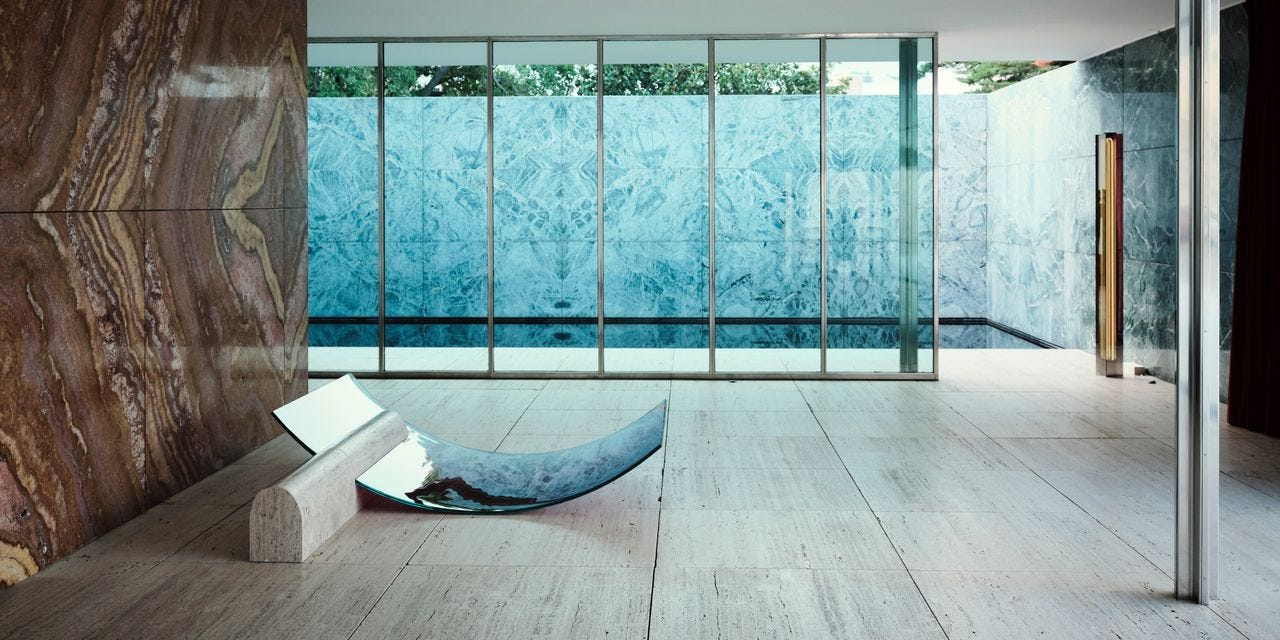
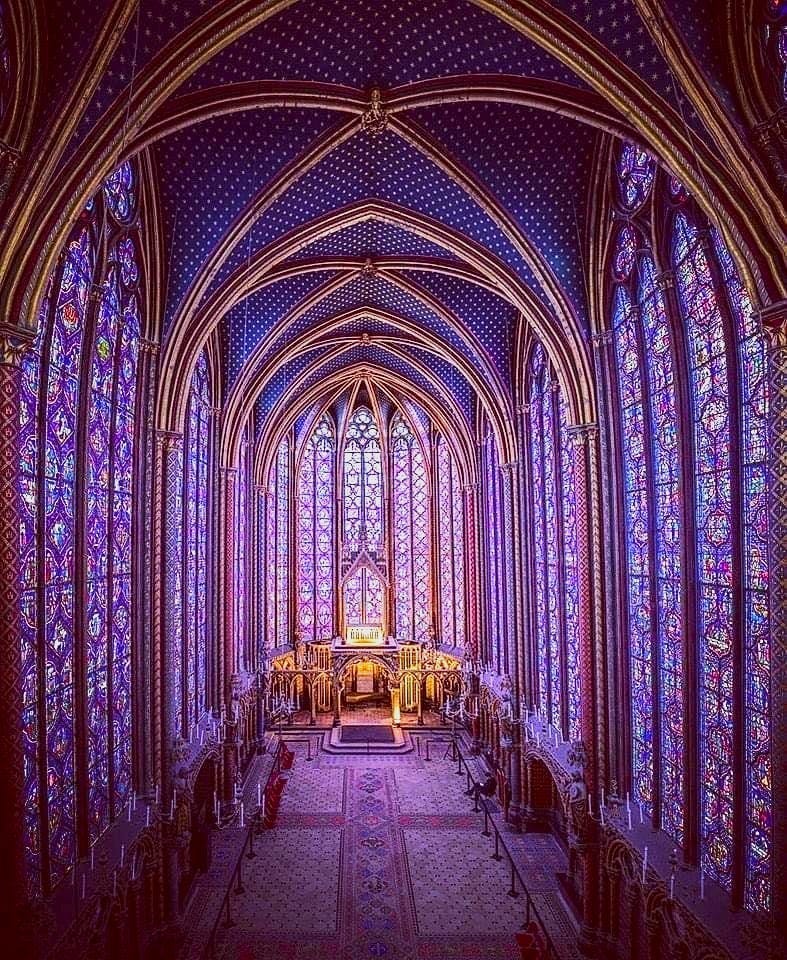
Consider the Barcelona Pavilion by Mies van der Rohe and Lilly Reich: all horizontal planes, travertine and chrome, radical restraint elevated to poetry. Then consider the Sainte-Chapelle in Paris: verticality, stained glass so dense the walls seem to dissolve, Gothic excess as an act of devotion. These buildings share almost nothing in formal language. Both are undeniably beautiful. You don’t have to prefer one to acknowledge the other. Preference and recognition are different faculties entirely.
Beauty is felt before it is analyzed. That feeling generates joy, creativity, curiosity. Sometimes admiration. Sometimes just the quiet recognition that someone cared enough to fulfill their vision. That someone made a choice not from a menu of acceptable options but from something deeper. Something personal. An effort that cost them time, money and comfort, but they did it anyway. The alternative was putting something ordinary into the world and that would have cost them their spirit.
That recognition is disappearing. Not because beauty is dying. Beauty doesn’t die. It gets buried. Under convenience. Under consensus. Under the relentless pressure to optimize for reach instead of resonance. Under pressure for sameness.
Most of us still know it when we see it. The problem is that we see it less and less. And the deeper problem, the one I keep circling, is *why*. Why, in a world with more tools, more materials, more access, more information than any civilization before us, are we producing so much that is so forgettable?
I have a theory. It starts with desire. With the unsettling possibility that most of us don’t actually want the things we think we want. That our preferences have been furnished for us, quietly and at scale. What we call taste is often just compliance wearing a better outfit.
More on that next time.
This is Part I of The Origins of Taste, a series on beauty, desire, and the disappearing art of the find.
Insist on yourself. Never imitate.
Loved this. Opening on the idea that aesthetics are equivalent to ethics sets the whole piece up perfectly. Taste as a moral tell and not just a visual one is a rich place to start Part I.
Loved this, especially the part about objects only aspiring to look lived-in.